Smart Starts: How to Prevent Injuries as the Fall Season Kicks Off
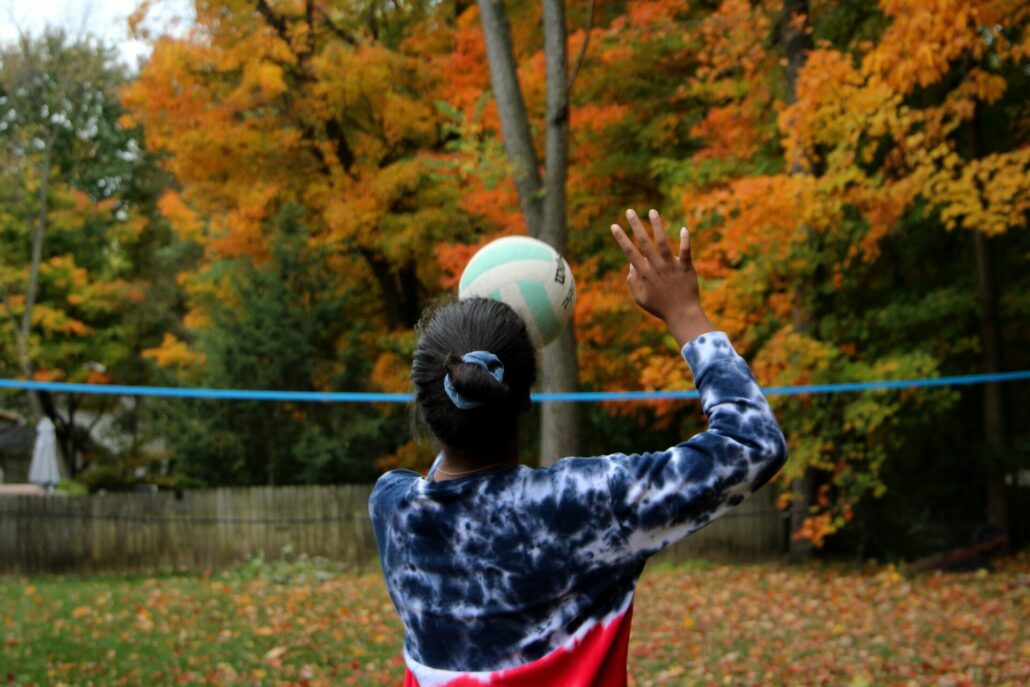
Fall sports often bring a rapid increase in running, sprinting, jumping, cutting, contact, and overall training volume. When these demands increase faster than the body can adapt, the risk of injury may increase. Managing training load and allowing adequate recovery are important components of injury prevention (Soligard et al., 2016; Drew & Finch, 2016).
A sprain occurs when a ligament is stretched or torn, while a strain involves injury to a muscle or tendon. These injuries can occur when the forces placed on a tissue exceed its ability to tolerate and control that load. The risk of injury can also be influenced by factors such as previous injury, physical conditioning, neuromuscular control, and the specific demands of the sport (Emery et al., 2015).
Different people may experience this transition in different ways:
- Teens returning to school sports may face sudden increases in running, jumping, and change-of-direction demands.
- Adults returning to hockey, soccer, pickleball, running, or the gym may be reintroducing high-load movements after a period of different activity levels, while previous injuries may also influence their risk of reinjury.
- Healthcare workers, teachers, and others with physically demanding jobs may already have a significant daily physical workload, making recovery and overall activity levels important considerations when returning to sport.
Fall sports are not inherently dangerous. Instead, the start of a new season is an opportunity to prepare the body for its upcoming demands. Structured training that incorporates strength, balance, agility, and movement control can help reduce certain sports-related injuries, particularly lower-extremity injuries in youth athletes (Emery et al., 2015; Steib et al., 2017).
Pre-Season Movement Assessment
A movement screen before tryouts can identify areas of mobility, strength, balance, coordination, and previous injury that may be important when preparing for sport. Key areas include:
- Joint mobility: Assessing specific joints (eg. shoulder, knee, ankle, etc) for restrictions that may affect movement and contribute to compensations.
- Strength: Evaluating whether key muscle groups, including the glutes, calves, quadriceps, hamstrings, core, and shoulder stabilizers, can meet the demands of the sport.
- Balance and neuromuscular control: Assessing single-leg stability, landing mechanics, and change-of-direction control. Neuromuscular training has been shown to reduce
certain sports-related injuries, particularly lower-extremity injuries in youth athletes (Emery et al., 2015; Steib et al., 2017). - Load tolerance: Considering how the body responds to increasing training volume and intensity, particularly when returning after a period of reduced activity.
- Previous injury: Identifying previous ankle, knee, shoulder, or back injuries that may influence movement or increase the risk of reinjury (Emery et al., 2010).
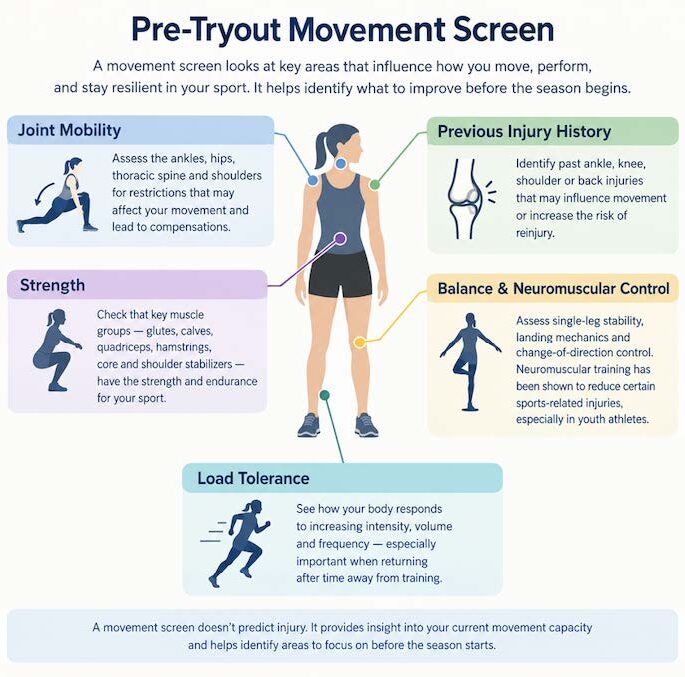
A movement screen does not predict who will get injured. Instead, it provides insight into an athlete’s current movement capacity and helps identify areas that may benefit from targeted preparation before the season begins.
No preparation program eliminates injury risk entirely. Instead, pre-season preparation focuses on modifiable factors such as strength, mobility, neuromuscular control, previous injuries, and training load (Bahr & Krosshaug, 2005; Soligard et al., 2016).
Building Your Injury-Prevention Routine
An effective plan should be tailored to the athlete and sport, but commonly includes:
Dynamic Warm-Ups
Active movements can prepare the muscles and joints for the demands of sport while improving mobility, coordination, and movement readiness. Structured warm-up programs have been shown to help reduce sports-related injuries (Soligard et al., 2008; Emery et al., 2015).
Targeted Strength Work
Strengthening the hips, knees, ankles, shoulders, and trunk can improve the capacity needed for running, jumping, landing, and changing direction. Strength and neuromuscular training are key components of injury-prevention programs (Emery et al., 2015; Steib et al., 2017).
Balance Training
Balance, coordination, landing mechanics, deceleration, and change-of-direction control can all be trained. These exercises are particularly valuable for sports involving jumping, cutting, and rapid changes in speed (Emery et al., 2015; Steib et al., 2017).
Gradual Load Increases
Training volume and intensity should increase progressively, particularly after a period of reduced activity. Gradual progression allows the body to adapt while considering factors such as fitness, recovery, and previous injury (Drew & Finch, 2016; Soligard et al., 2016).
Recovery
Adequate sleep, nutrition, rest, and recovery between training sessions support the body’s ability to adapt to increased physical demands (Soligard et al., 2016).
Personalized Pre-Season Assessment: Your Path to a Safer Season
At Treloar Physiotherapy a pre-season assessment provides a personalized look at how your body is moving and where you may benefit from additional preparation before the season begins. For more information, book-in for an initial consultation with one of our Physiotherapists where you’ll receive clear feedback, practical exercises and progressions, and a plan tailored to your sport, lifestyle, and goals.
By Shreeya Chaturvedi
Physiotherapist
Treloar Physiotherapy Kerrisdale


 )
)