Meet Our Team: Renee Lemieux, Physiotherapist Specializing in Scoliosis and Pilates-Based Rehabilitation
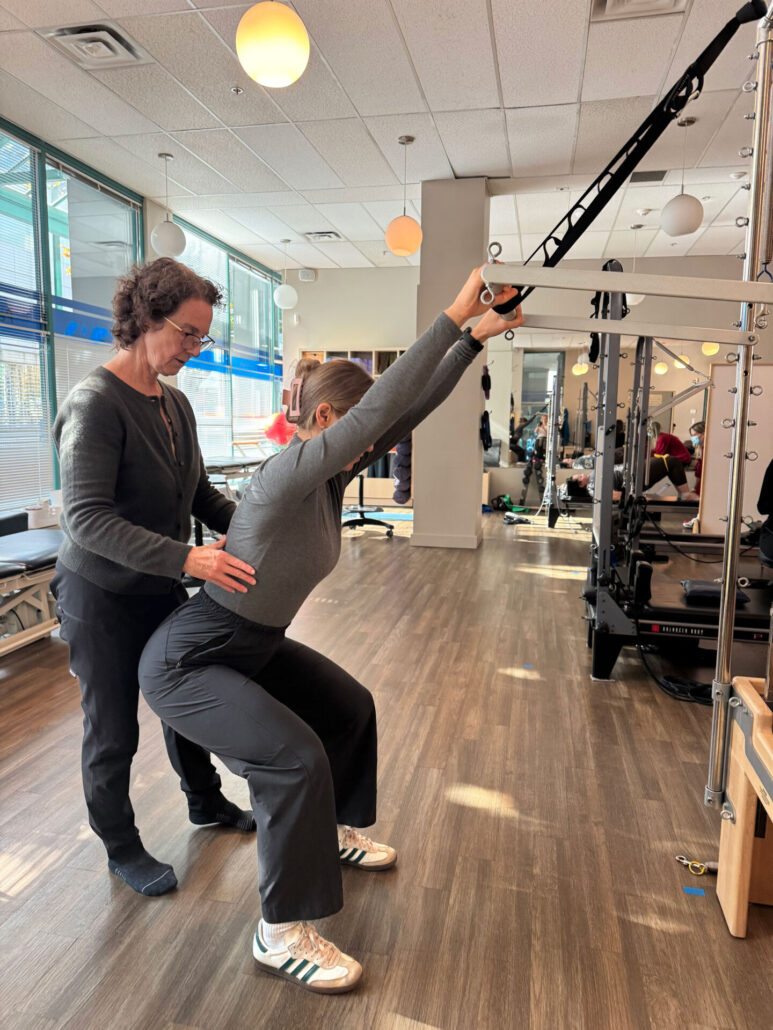
We’re excited to introduce Renee Lemieux to the Treloar team!
With specialized training in Schroth-based exercises for scoliosis and a background in Pilates, Renee brings a unique combination of skills to her physiotherapy practice. She helps patients build strength, improve movement, and work towards their individual goals.
We sat down with Renee to learn more about her journey into physiotherapy, her approach to scoliosis care, and how Pilates-based exercises can support spinal health and overall well-being.
Tell us a little about yourself and your journey into physiotherapy. What inspired you to specialize in Pilates and scoliosis care?
Before becoming a physiotherapist, I was a performing artist with a dance company in New York City. I’ve always been interested in anatomy, and I believed that with smart training and good alignment, I could continue dancing for as long as I wanted.
That curiosity led me to study physiotherapy, where I could deepen my understanding of anatomy, physiology, and human movement.
As a dancer, I was introduced to Pilates and really appreciated its benefits, particularly the focus on strength, flexibility, concentration, and proper alignment.
Later, as a physiotherapist, I realized I wanted more tools to help patients diagnosed with scoliosis. This inspired me to learn more about scoliosis and other spinal conditions. I went on to complete specialized training through the Barcelona
Scoliosis Physical Therapy School (BSPTS), learning Schroth-based exercises for scoliosis and kyphosis. I’ve found that many Pilates exercises complement Schroth-based exercises beautifully, particularly when it comes to developing strength and supporting spinal stability.
What is scoliosis, and how can your specialised training help you support patients living with this condition?
Scoliosis is a three-dimensional condition that affects the curvature of the spine and trunk. It can develop during childhood or adolescence, particularly during periods of rapid growth, but it can also occur or progress in adulthood.
My specialized training has helped me better understand the different ways scoliosis can affect the spine and body, as well as the principles behind Schroth-based exercises for scoliosis and kyphosis.
Many of my patients have benefited from learning these exercises. For adults, they can help improve postural awareness, breathing expansion, and strength. In some cases, they may also help manage the progression of the spinal curve.
For younger patients, these exercises can support postural awareness and movement training. When a brace is recommended, specific exercises may also complement brace treatment.
Every person is different, so treatment is tailored to the individual’s needs, age, and goals.
Pilates is often associated with fitness and flexibility. How can Pilates-based exercises be used as part of a physiotherapy treatment plan?
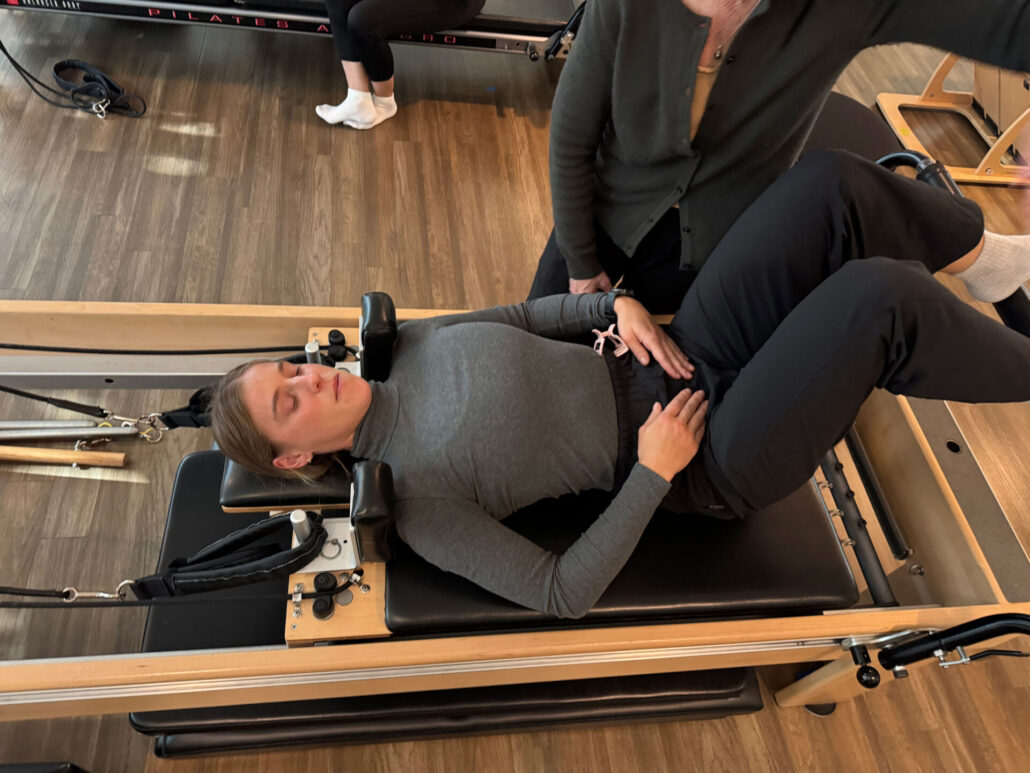
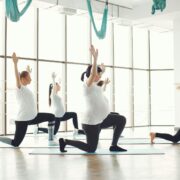
Pilates-based exercises can be a wonderful addition to physiotherapy treatment for several reasons.
First, they encourage good alignment and body awareness during movement. They also allow us to work on the whole body while paying attention to specific areas that may need extra support.
Another important benefit is the focus on breathing and controlled movement.
Exercises can be adapted to suit each person’s abilities and gradually progressed as they become stronger and more confident.
Ultimately, Pilates-based exercises can help patients move more efficiently, build strength and endurance, and carry these improvements into their everyday activities.
Who might benefit from Pilates-informed physiotherapy, and what goals can it help patients work towards?
Many people can benefit from Pilates-informed physiotherapy, including those living with scoliosis, kyphosis, back or neck pain, or shoulder, hip, knee, and ankle problems.
For example, someone experiencing hip pain due to osteoarthritis may benefit from exercises using the Pilates reformer. The reformer allows us to work on hip and leg mobility while gradually building strength in a controlled, supported way.
The goals will depend on each person’s needs and lifestyle. They might include:
- Walking more comfortably and efficiently.
- Going up and down stairs with greater control and less pain.
- Standing for 30 minutes while cooking or doing other daily activities.
- Improving posture, balance, and strength.
- Building the strength and movement habits needed to better manage back pain and postural difficulties.
Goals are always established following an assessment and discussed together. It’s important to me that patients have a voice in their treatment and feel involved in deciding what they want to achieve.
What can patients expect from a session with you? And what would you say to someone who is curious about Pilates but unsure whether it’s right for them?
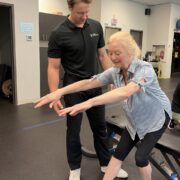
During our first session, I begin with an assessment to better understand the patient’s needs and determine an appropriate treatment plan. I’ll explain my findings and recommendations, and we’ll get started with an introductory exercise program suited to their abilities and goals.
If you’re curious about Pilates-based physiotherapy but aren’t sure whether it’s right for you, I would encourage you to give it a try! Exercises can be adapted to different needs and ability levels, so you don’t need to have any previous Pilates experience.
You’re also welcome to call or email me at the clinic. I’m always happy to answer questions and discuss any concerns you may have.
Thank you, Renee, for sharing your experience and expertise with us!
Interested in learning whether Pilates-based physiotherapy could help you? Contact Treloar to book an assessment with Renee Lemieux.